Testing Service

FRESH & HARDENED CONCRETE TESTING

Our concrete testing services ensure compliance with mix design specifications, structural performance requirements, and durability standards.

10
Test Types
9
States Served
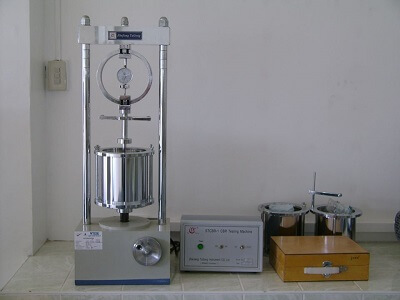
Laboratory testing of construction material samples
Overview

ABOUT OUR FRESH & HARDENED CONCRETE TESTING

Concrete testing is done in two stages. Fresh concrete tests are performed at the time of placement, while the concrete is still workable, to confirm that the mix delivered matches the design. Hardened concrete tests are performed after the concrete has cured, on specimens cast at placement, to confirm that it reached the strength and durability the design requires.

Together, the two stages show whether the concrete that went into the structure is the concrete that was specified. The tests below are what fall under it.

Laboratory testing of construction material samples
Commonly Used For
  • Mix design verification
  • Structural performance
  • Durability requirements
What Falls Under It

WHAT'S INCLUDED

01

Slump Test

ASTM C143

The slump test measures the consistency and workability of fresh concrete. A cone is filled with concrete and lifted away, and the distance the concrete settles is the slump. It is a quick check, made on delivery, that the mix has the right amount of water and can be placed properly.

02

Air Content Test

ASTM C231

Air content measures the percentage of microscopic air bubbles in fresh concrete. Deliberately entrained air helps concrete resist damage from freezing and thawing, but too much air lowers its strength, so the amount is checked against the specified range.

03

Temperature Measurement

ASTM C1064

The temperature of fresh concrete is measured because it affects setting time and strength gain. Concrete that is too hot can set too quickly and crack, while concrete that is too cold gains strength slowly. Specifications usually give minimum and maximum temperatures at placement.

04

Unit Weight and Yield

ASTM C138

Unit weight is the density of fresh concrete, found by weighing a known volume of it. It is used to calculate yield, which confirms that a batch produces the volume of concrete it should and helps detect errors in batching.

05

Concrete Sampling and Cylinder Casting

ASTM C172 / C31

Taking a representative sample from the delivered concrete and casting cylinders from it is the starting point for all strength testing. The cylinders are protected on site and then cured under controlled conditions, so that their test results reflect the quality of the concrete itself and not the way the samples were handled.

06

Compressive Strength

ASTM C39

Compressive strength is the main measure of hardened concrete. Cylinders are crushed in a compression machine at a specified age, and the maximum load is converted to pounds per square inch. Results are compared with the strength specified in the design.

07

Flexural Strength

ASTM C78

Flexural strength measures a concrete beam's resistance to bending. A beam is loaded until it cracks, and the load at failure gives the result. It is used mainly for pavements and slabs on ground, where bending stress matters more than compression.

08

Splitting Tensile Strength

ASTM C496

Splitting tensile strength indirectly measures concrete's resistance to pulling forces. A cylinder is laid on its side and compressed along its length until it splits. Concrete is much weaker in tension than in compression, so this result helps evaluate its resistance to cracking.

09

Modulus of Elasticity

ASTM C469

The modulus of elasticity describes how stiff concrete is, meaning how much it deforms under a given load. It is measured by loading a cylinder and recording how much it shortens, and it is used in structural design to predict the deflection of beams, slabs and columns.

10

Rapid Chloride Permeability (RCPT)

ASTM C1202

The rapid chloride permeability test measures how easily chloride ions can pass through concrete, reported as the electrical charge passed through a sample over six hours. Lower values indicate concrete that better resists chlorides from de-icing salts or seawater, which corrode reinforcing steel.

Methods shown are the governing ASTM / AASHTO standards. If your project specifies a different standard or a state DOT method, tell us and we'll confirm.

Process

HOW IT WORKS

01

Tell us about your project

Share the tests you need, the specifications that apply, and your timeline.

02

We confirm the scope

We review the requirements with you and confirm the tests, standards and sample needs.

03

Testing in our lab

Your samples are tested in our Norcross, Georgia laboratory.

04

Receive your report

Reports can be ready in as little as 48 hours, depending on the test.

NEED FRESH & HARDENED CONCRETE TESTING?

Tell us about your project and we'll help you choose the right tests.

6500 McDonough Dr, Suite E-04, Norcross, Georgia 30093
Mon–Sat: 7am – 4pm
SSN Material Testing

Independent material testing laboratory delivering accurate and reliable results for construction projects across South Atlantic States.

Contact Us

Quick Links

Follow Us

Follow us on social media for updates, project highlights, and company news.

© 2026 SSN Material Testing. All rights reserved.